
 Everything Indian
INTRODUCTION:
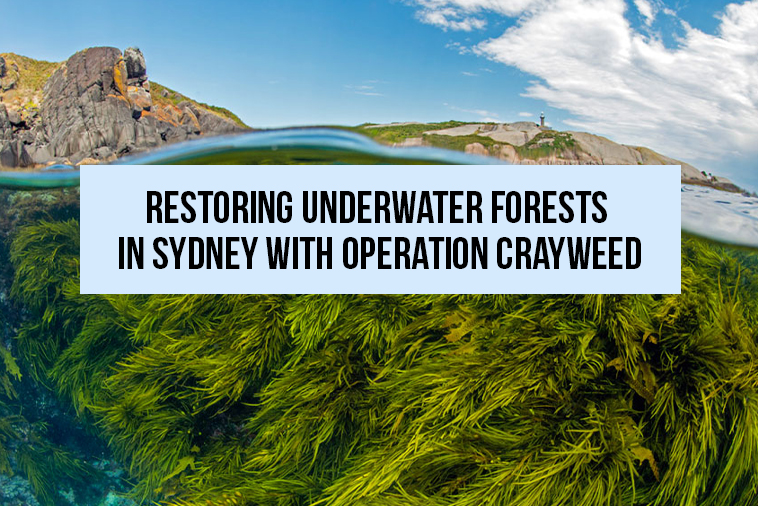
Operation Crayweed is effectively recovering lost underwater forests, which is a development that is good for Sydney’s marine ecosystem.
The Sydney Institute of Marine Science is the project’s lead institution, and it involves reintroducing crayweed to the shoreline and encouraging the development of other marine flora and fauna through the use of cutting-edge techniques.
Within the following three to five years, it is planned to restore the entire 70 km stretch of lost crayweed.
Scientists have been working feverishly in recent years to restore the underwater forests off the coast of Sydney, which have been severely degraded in recent decades. These forests of crayweed, a form of seaweed, provide critical habitat for a diverse range of marine creatures.
The demise of these underwater forests was mostly caused by sewage waste contamination that contaminated the waters off the coast of Sydney in the 1980s. Despite efforts to restore the city’s sewage infrastructure, the damage was done, and by 2008, crayfish had completely disappeared from a 70-kilometre length of Sydney’s coastline.
However, the Sydney Institute of Marine Science (SIMS) started Operation Crayweed in 2012 to replenish declining crayfish populations. Researchers were able to generate a self-sustaining rebirth of crayweed forests by supporting crayweed reproduction with biodegradable mesh mats, allowing other marine flora and wildlife to repopulate the area.
Crayweed populations have increased significantly along Sydney’s coastline as a result of the success of Operation Crayweed, including at Kurnell, Bondi Beach, and the Cabbage Tree Bay Aquatic Reserve in Manly.
Breen Resources, a waste management and disposal facility, has been sponsoring the Kurnell project since 2018, and the results have been nothing short of spectacular. Crayweed growth has been recorded hundreds of metres away from the Kurnell restoration site, according to researchers.
CONCLUSION:
In the future, Operation Crayweed hopes to continue its work for the next three to five years, with the objective of restoring the full 70-kilometre stretch of lost crayweed and contributing to the restoration of marine biodiversity along Sydney’s entire coastline.
This project’s accomplishment is a significant step forwards in the ongoing efforts to conserve and maintain the world’s oceans and the ecosystems they support.


GIPHY App Key not set. Please check settings