
 Everything Indian
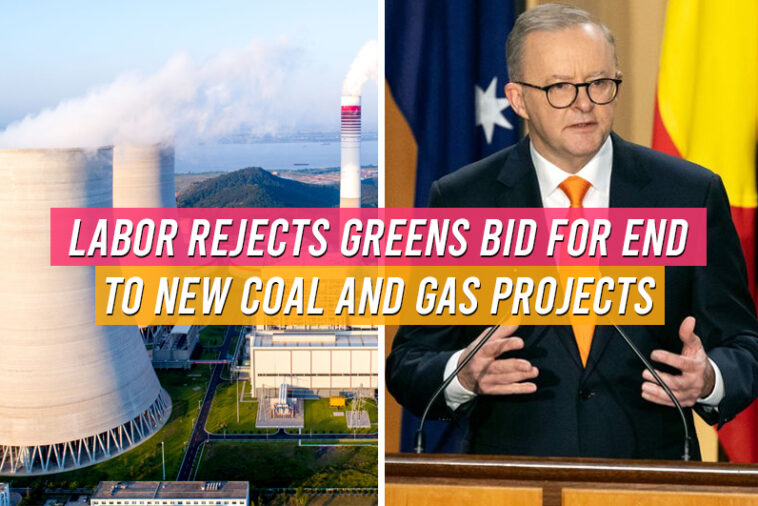
According to Prime Minister Anthony Albanese, Labor would not accept a ban on new coal and gas projects because it would be “devastating” economically.
During discussions, Greens leader Adam Bandt pushed the promise to pass the new government’s climate package.
Albanese wants his government’s commitment to reduce greenhouse gas emissions by 43% by 2030 codified in law if a subsequent administration tries to lower the goal.
But to get it passed by the Senate, it needs the support of an independent, the Greens (who want a 75% cut), or the Coalition.
Some of the Greens’ demands have been agreed upon by Labor.
However, Albanese declared on Tuesday night that he would allow exports of coal and gas or new fossil fuel projects.
Bandt has emphasized the push in his public remarks about the legislation, which will be tabled to Parliament on Wednesday.
He expressed his party’s concern Tuesday night that plans to expand coal and gas mines would exacerbate the climate catastrophe.
On Climate Change, the Intergovernmental Panel, the leading organization of climatologists in the world, warns that unless greenhouse gas emissions decline more quickly than nations have promised, Earth will pass a critical danger point.
According to research released earlier this year, ongoing investments in fossil fuel infrastructure and the clearance of substantial forest areas for agriculture jeopardize the drastic reductions in emissions required to adhere to the Paris Agreement’s 1.5-degree warming limit.
Albanese stated that prohibiting the export of fossil fuels would harm Australia’s economy and raise global emissions.
Although an AAP fact checks in 2021 found then-prime minister Scott Morrison’s assertion that foreign coal caused 50% more emissions to be rubbish, an ABC fact check in 2015 showed that Australia commonly sold cleaner coal than other countries.
According to IPCC data, the difference in emissions per unit of energy between two different grades of coal is only 1.6%.
A significant proportion of voters wanted greater action on climate change than the major parties were willing to take, according to Ian McAllister, a political scientist at the Australian National University who conducts surveys of voters following elections.


GIPHY App Key not set. Please check settings